Learning survival skills at home is one of the simplest ways for beginners to become more…
How To Practice Blackout Readiness Skills At Home
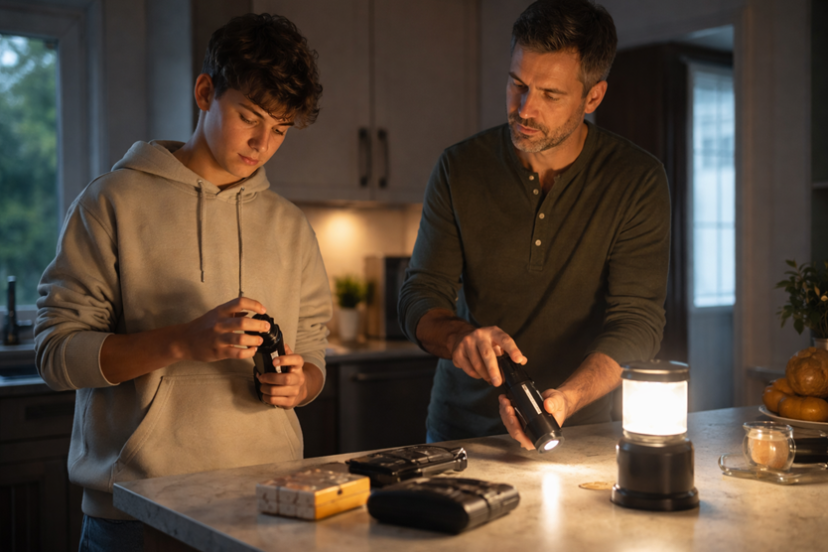
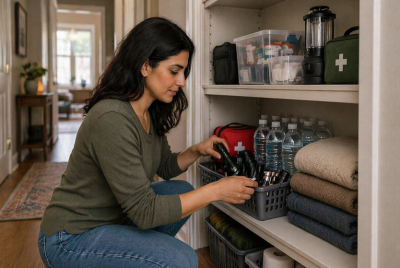
Practicing blackout readiness skills at home means getting familiar with how your household functions when the power goes out, before you are dealing with darkness, inconvenience, spoiled food worries, or a stressed family. It is less about pretending you are in a disaster and more about noticing what becomes harder, what you forget, and what small adjustments would make your home calmer and more usable during a real outage.
For many households, blackout readiness feels vague until the lights actually go out. People may own flashlights, batteries, candles, or backup chargers, but still feel disorganized when they cannot see clearly, cook normally, charge devices, or move through the house the way they usually do. Practicing at home helps turn blackout readiness from an abstract idea into something more familiar and manageable.
Blackout readiness is really about household function
A blackout affects more than lighting. It changes how you move through the home, communicate, prepare food, manage temperature, charge essentials, and keep everyone calm. That is why blackout readiness is not just about having supplies. It is about knowing how your home works when the usual systems are interrupted.
In a real outage, people often discover that the hardest part is not the dark itself. It is the friction. You cannot find the flashlight you were sure you had. The backup batteries are in another room. The phone charger is dead. The hallway feels unsafe. The refrigerator gets opened too often. The children get unsettled. Simple tasks suddenly take more energy.
Practicing at home helps reduce that friction. It allows you to notice weak points without the pressure of a real disruption.
Why this matters more than people think
Many power outages are short, but even short outages can feel chaotic when a household has not thought through the basics. A few hours without power can create confusion around meals, lighting, communication, routines, and sleep. Longer outages increase those challenges, especially when weather, medical needs, refrigerated medication, remote work, or young children are involved.
The value of practicing is not perfection. It is familiarity.
When people practice blackout readiness at home, they often realize that confidence comes from small things going more smoothly. Knowing where lighting is stored. Knowing which rooms become hardest to use. Knowing how to preserve device battery. Knowing what the evening feels like when screens, lamps, and kitchen appliances are unavailable. That kind of familiarity can make a household less reactive and more composed.
What practicing at home actually looks like
Practicing blackout readiness at home does not need to be dramatic. It can be as simple as intentionally limiting your use of powered conveniences for a short period and noticing what becomes difficult. The goal is not to simulate danger. The goal is to observe your household honestly.
A useful practice session often reveals practical questions such as:
Which areas of the home become inconvenient first?
Some households immediately notice that stairs, bathrooms, entryways, and kitchens become awkward or unsafe without lighting. Others realize that bedrooms are fine, but common spaces are poorly set up for an outage. This kind of awareness matters because it helps you think in terms of everyday function rather than general preparedness.
What do people reach for automatically?
A blackout often exposes how dependent daily routines are on switches, appliances, chargers, and internet access. You may discover that family members do not know where flashlights are kept, or that everyone assumes someone else is managing the situation. That is a readiness issue, even if you technically own the right supplies.
What becomes stressful faster than expected?
The stress point might not be what you assumed. It may be boredom, uncertainty, poor lighting in one room, lack of charged devices, or the way the household starts opening and closing the refrigerator too often. Practicing helps reveal the emotional and logistical friction that makes an outage feel bigger than it is.
One of the biggest misunderstandings: owning supplies is not the same as using them well
A common preparedness mistake is assuming that buying useful items automatically creates readiness. It does not. A flashlight in a drawer is only helpful if people know where it is, it works, and it is easy to access when the room is dark. A power bank is only helpful if it is charged. A backup stove solution is only helpful if the household understands where and when it can safely be used.
This is why practicing matters. It bridges the gap between possession and function.
Many people are more prepared than they think in terms of what they own, but less prepared than they expect in terms of how smoothly those items fit into actual household routines. That is not failure. It is exactly what practice is meant to uncover.
A calmer way to think about blackout readiness
It helps to reframe blackout readiness as a household coordination skill, not a test of toughness. You do not need to prove that your family can live dramatically off-grid. You are trying to make a temporary disruption feel less confusing, less wasteful, and less stressful.
That mindset changes the goal.
Instead of asking, “Do we have everything?” it is often better to ask, “Can we function more smoothly if the power goes out tonight?” That question is narrower, more realistic, and easier to act on.
This also helps prevent a common overreaction: buying more gear when the real problem is disorganization. Sometimes the issue is not the absence of supplies. It is that the right items are scattered, uncharged, expired, blocked, forgotten, or unfamiliar.
Patterns that keep households reactive during outages
Blackout readiness often breaks down in ordinary ways, not dramatic ones. A few patterns tend to make households feel less prepared than they need to be.
Supplies are stored without a clear use plan
People may have batteries in one place, lanterns in another, candles somewhere else, and chargers buried in a drawer. Nothing is technically missing, but nothing is coordinated either. In an outage, that creates delays and frustration.
Everyone assumes someone else knows the plan
In many homes, one person informally handles preparedness, but the rest of the household does not know where things are or what to do first. That creates unnecessary dependence and confusion.
The home is set up for convenience, not interruption
Modern homes are built around reliable power. That is normal. But it means a blackout quickly exposes how much routine depends on automatic systems. If you have never thought about that before, even a manageable outage can feel strangely disorienting.
People focus only on gear, not behavior
Good blackout readiness is partly about habits. Conserving battery life, keeping refrigerator doors closed, using lighting intentionally, staying calm, and communicating clearly are all part of readiness. Gear supports those habits, but it does not replace them.
Practicing at home helps you notice what matters most
One of the most valuable things about practicing blackout readiness at home is that it helps you separate real problems from imagined ones. Before practice, people often worry in broad terms. After practice, they can usually name a few specific improvements that would make a real difference.
That is progress.
It is easier to improve a household when you can say, “The kitchen gets difficult after dark,” or “No one knows where the backup lights are,” or “We need a better place to keep charging supplies,” than when you only have a vague sense that you should be more prepared.
This kind of clarity is calming because it makes readiness more concrete. It shifts your mindset from general worry to practical adjustment.
You do not need to make blackout readiness bigger than it is
Some preparedness topics become overwhelming because people assume they need a full system before they can benefit. Blackout readiness does not have to work that way. You can learn a great deal from simply noticing how your household responds to a short, controlled disruption of normal routines.
That makes this a very approachable readiness skill to practice.
You are not trying to master every emergency. You are just building familiarity with one common disruption that affects everyday life in very practical ways. That is useful, realistic preparedness.
A more prepared home usually feels more ordinary, not more extreme
A well-prepared home during a blackout does not necessarily look dramatic. It often looks calm, organized, and ordinary. People know where things are. Movement through the home is easier. The household is less likely to waste device battery, misplace essentials, or create extra stress.
That is a helpful reminder because preparedness is sometimes misunderstood as something intense or identity-driven. In reality, good household readiness often looks like quiet competence. It feels less like performing preparedness and more like reducing avoidable friction.
The real goal is smoother decision-making under disruption
Practicing blackout readiness at home is valuable because it improves decision-making while conditions are still simple. It gives you a chance to notice small problems now, when they are easy to correct, instead of during a real outage when everyone is tired, distracted, or uncomfortable.
That does not mean your household has to become perfectly prepared. It means you can become less surprised.
And in many everyday disruptions, that is what preparedness really offers: not total control, but less confusion, less waste, and a more grounded response when normal systems stop working for a while.

More to Explore