Learning survival skills at home is one of the simplest ways for beginners to become more…
Beginner Mistakes To Avoid When Practicing Preparedness At Home

Practicing preparedness at home should make daily life feel calmer and more organized, not more complicated. One of the biggest beginner mistakes is treating preparedness like a dramatic event instead of a practical household skill. When that happens, people often overbuy supplies, focus on unlikely scenarios, skip basic routines, or create plans that look good on paper but do not fit real life. A better approach is to keep preparedness simple, specific, and easy to maintain.
For most households, the goal is not to become prepared for everything all at once. It is to reduce confusion, improve everyday readiness, and make small disruptions easier to handle. That might mean being ready for a power outage, a short-term water problem, a missed grocery run, a sick family member, or a local weather event. The more grounded your approach is, the more likely it is to actually help when life gets inconvenient or stressful.
Why preparedness practice feels harder than people expect
Many beginners assume preparedness is mostly about buying the right items and storing them somewhere in the house. That is understandable, but it misses an important point. Preparedness only becomes useful when people know what they have, where it is, and how they would use it under mild stress or low visibility.
That is why practicing at home can feel surprisingly revealing. A flashlight may be in the house, but not where anyone can find it. A backup battery may exist, but not be charged. Extra food may be available, but not in meals the household would realistically cook during a disruption. A family may say they have a plan, but everyone may picture something different.
This is normal. It does not mean a household is failing. It usually means they are discovering the gap between owning supplies and being ready to use them well.
Mistake number one: trying to do too much too fast
One of the most common beginner errors is turning preparedness into a huge project immediately. People often try to build a full emergency setup in a weekend, cover every possible scenario, or copy someone else’s system all at once. That usually creates overwhelm, clutter, and unfinished plans.
Preparedness works better when it grows from the household’s actual needs. A family with young children, a person in a small apartment, and an older couple managing medications will not all prepare in the same way. Starting too big often hides the basics that matter most.
A calmer way to think about it is this: readiness improves when your home can handle ordinary disruption more smoothly. That is a more useful benchmark than trying to feel fully prepared for every emergency category at once.
Mistake number two: buying gear before understanding the problem
Another easy trap is making preparedness mostly about products. New practitioners often assume that buying more equipment means they are making faster progress. But gear without context can become expensive clutter.
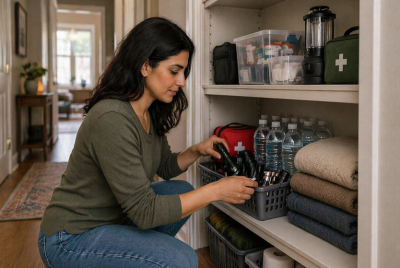
A household does not become more prepared just because it owns more items. It becomes more prepared when those items solve real problems clearly. A lantern is helpful if it is easy to reach during a power outage. Stored water is helpful if the amount makes sense for the household and rotation is manageable. A first aid kit is useful if people know what is in it and can find it quickly.
The mistake is not buying supplies. Supplies matter. The mistake is letting supplies replace thinking. When people buy before they understand their likely disruptions, their layout, their routines, and their weak spots, they often end up with things that do not fit their actual situation.
Mistake number three: practicing in a way that is too artificial
Some beginners practice preparedness in ways that do not reflect how the home really functions. They test an idea once under perfect conditions, in daylight, with plenty of time, and then assume the system works.
Real disruptions are usually less dramatic and more inconvenient. They happen when people are tired, busy, distracted, sick, or trying to manage several things at once. That is why a system that seems fine in theory can fall apart in practice.
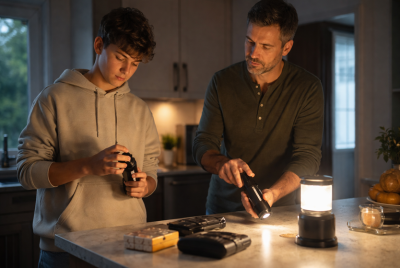
For example, a home may technically have emergency lighting, but if it takes ten minutes to gather everything from different rooms, that system is not as ready as it looks. A pantry may look well-stocked, but if nobody wants to eat the food or knows how to prepare it simply, it is less useful than expected.
Preparedness practice is most helpful when it reveals friction. That friction is not bad news. It is useful information.
Mistake number four: ignoring household habits
A plan that fights normal household behavior usually does not last. This is one of the biggest reasons preparedness efforts quietly fade out after an enthusiastic start.
If a family never checks one specific drawer, putting critical items there may not work. If people routinely leave phones at low battery, backup charging needs to be extremely easy and visible. If schedules are chaotic, complicated preparedness routines will probably not hold.
Beginners sometimes believe a good system should look impressive. In reality, a good system usually looks ordinary. It fits the home, supports normal habits, and does not rely on everyone becoming unusually disciplined overnight.
This is one of the most helpful reframes in preparedness: the best setup is often the one your household will actually maintain.
Mistake number five: treating preparedness like a private hobby instead of a household reality
When one person in the home handles everything alone, preparedness can become fragile. If only one person knows where the backup supplies are, how to shut off something important, or what the basic plan is, the household may still be vulnerable.
This does not mean every family needs formal drills or long planning meetings. But basic awareness matters. People should generally know where core items are, what the most likely local disruptions are, and what the household would do first in a simple problem.
Beginners sometimes avoid these conversations because they do not want to sound dramatic. But calm, everyday communication usually makes preparedness feel less intimidating, not more. When readiness becomes part of normal household awareness, it feels more supportive and less extreme.
Mistake number six: focusing on rare disasters while missing common disruptions
A lot of beginners are pulled toward big, dramatic scenarios because those are memorable and emotionally intense. But many households are far more likely to deal with temporary power loss, short supply interruptions, weather-related inconvenience, communication problems, or a need to stay home unexpectedly for a few days.
If preparedness is built around unlikely extremes, it can miss the everyday problems that cause the most real-world stress. A family may imagine a major catastrophe while still being underprepared for a three-day disruption that affects food, lighting, charging, transportation, or routines.
This does not mean rare emergencies never matter. It means common disruptions are often the best place to build confidence. They are easier to think through, easier to practice for, and more likely to improve everyday resilience.
Mistake number seven: confusing information with readiness
Reading, watching, researching, and learning can absolutely help. But preparedness knowledge does not automatically turn into readiness. One of the most common beginner patterns is consuming lots of information without translating it into household reality.
It is easy to feel productive while comparing lists, watching demonstrations, or reading advice. But if that information never becomes a clear setup in the home, the household stays mostly theoretical.
This is not a criticism. It is a reminder that preparedness becomes real through use, placement, familiarity, and repetition. Even small improvements in those areas usually matter more than endless new input.
Mistake number eight: building systems that are hard to maintain
Some preparedness setups fail not because they are wrong, but because they are too burdensome. Supplies expire unnoticed. Storage becomes messy. Plans become too detailed to remember. Items get borrowed for daily life and never returned.
Beginners often underestimate maintenance. They picture preparedness as something that can be completed once and left alone. In real households, readiness works better when it is simple enough to refresh without much strain.
This is where realism matters more than ambition. A smaller system that is organized and current is usually more useful than a larger one that nobody checks.
Mistake number nine: assuming calm preparedness should feel dramatic
A quiet misconception runs through a lot of beginner preparedness thinking: if it does not feel intense, maybe it is not serious enough. But effective home preparedness usually feels less dramatic over time, not more.
It often looks like labeled storage, easier routines, clearer thinking, and fewer frantic last-minute decisions. It feels like knowing where the basics are and not needing to scramble when something small goes wrong. That may seem unexciting, but it is exactly the point.
Preparedness is not supposed to become a stressful identity project. It is supposed to reduce stress.
What makes beginner mistakes worse
These mistakes usually get worse when people judge themselves too harshly or assume they have to get everything right immediately. That mindset can turn small gaps into discouragement.
It also gets worse when people copy advice without adapting it. Not every suggestion belongs in every home. Space, budget, family structure, climate, neighborhood conditions, and health needs all shape what practical preparedness looks like.
Another problem is all-or-nothing thinking. Some people feel that if they are not highly prepared, then their effort barely counts. That belief often stops steady progress. In reality, preparedness is built through gradual improvement. Better organized lighting, better food awareness, better communication, and better household familiarity all count.
A calmer way to approach preparedness at home
A more useful starting point is to ask: what kinds of disruptions would make our normal routines harder, and where would confusion show up first?
That question is more practical than trying to prepare for everything at once. It keeps attention on daily life, household friction, and realistic support systems. It also helps people see that preparedness is not separate from normal living. It is often just ordinary household organization with a clearer purpose.
When beginners let preparedness stay grounded, they usually make better decisions. They buy less randomly. They practice more realistically. They notice what actually needs improvement. And they build systems that feel supportive rather than extreme.
The good news is that most beginner mistakes are fixable. In fact, noticing them is often part of becoming more prepared. The point is not to avoid every misstep. The point is to keep moving from reactive, cluttered, or vague readiness toward something simpler, clearer, and easier to live with.
Preparedness at home does not need to look impressive to be effective. It only needs to work in the real conditions of your real household.

More to Explore